AV Control· 11 November 2026· 5 min read
Enterprise Networked AV Design: Choosing Converged, Isolated, or Hybrid Networks
An analysis of AVoIP deployment models from a systems integrator's perspective, focusing on performance, accountability, and management.

The convergence of AV and IT is no longer a trend—it is a standard. Using the network as the transmission medium for video and audio (Networked AV or AVoIP) is now common in projects ranging from corporate offices to large-scale venues. However, one question continues to cause confusion: Who owns and is accountable for the network infrastructure?
From a systems integrator's perspective, determining the network model during the design phase is crucial for ensuring stability, ease of maintenance, and security. This post analyzes three main network models: Converged, Isolated, and Hybrid.
1. Converged Networks: When AV and IT Merged
In a converged network design, all IT services—including voice (VoIP), data, and video (AVoIP)—are delivered over the same physical network infrastructure. This is often the preferred choice for large IT departments that require centralized management of all equipment according to organizational standards.
Benefits and Challenges
Benefits: Significant infrastructure cost savings if the existing network has sufficient bandwidth. The IT department takes ownership of hardware installation and maintenance, reducing the integrator's burden.
Challenges: Pre-existing IT policies (such as QoS or port security) may conflict with NAV requirements. Improper configuration of IGMP or PIM can lead to network congestion due to heavy multicast traffic from video streams.
Success in this model requires close collaboration. Integrators must provide detailed bandwidth specifications and multicast requirements so IT can tune the switches accordingly.
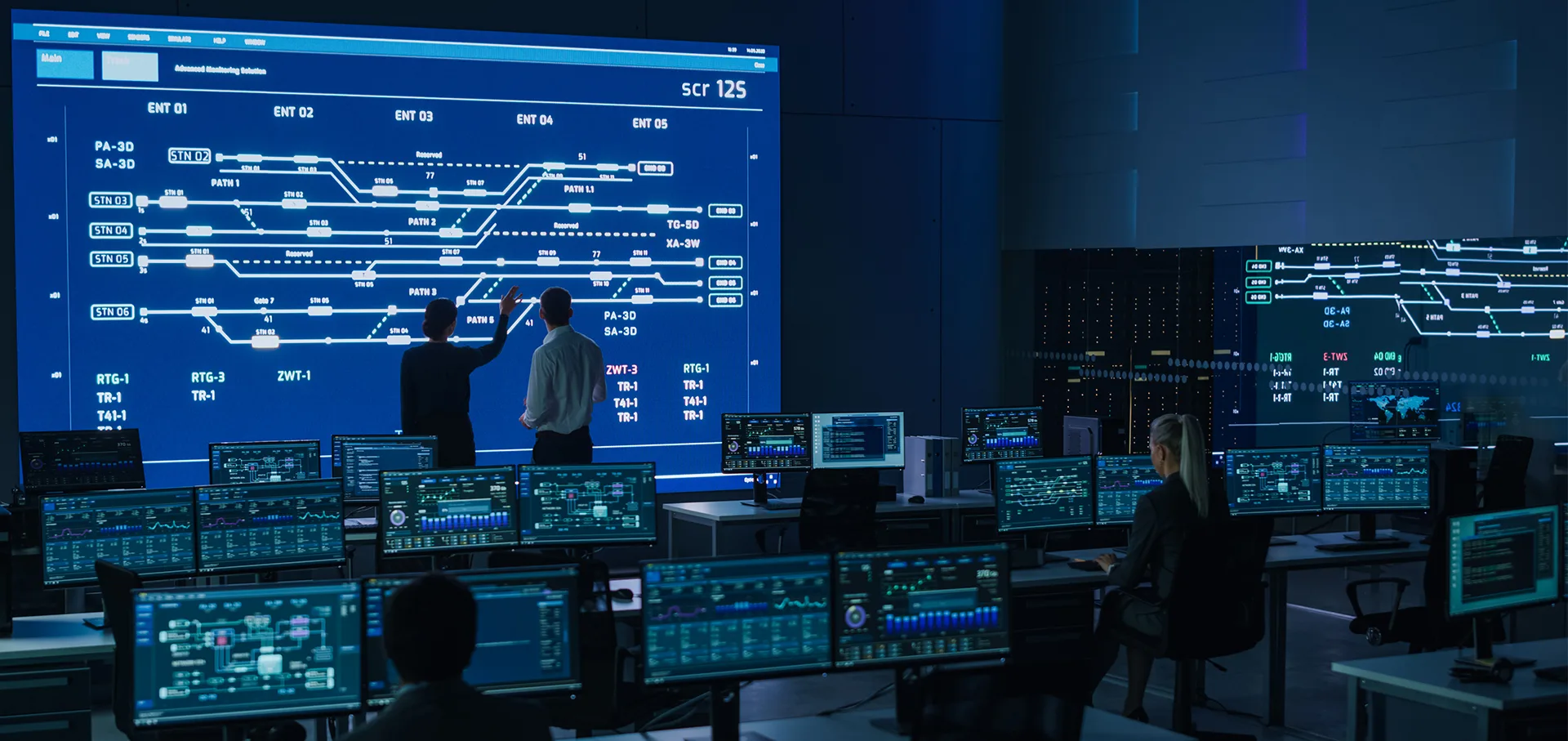
Converged networks require a strong partnership between AV and IT teams. Image: pro.harman.com
2. Isolated Networks: Total Autonomy
An isolated network is a standalone system designed and maintained solely for AV, with no connection to the client's corporate network. This is often the go-to choice for projects requiring high stability without third-party dependencies.
Why Choose an Isolated Network?
This model allows integrators to provide a true "turnkey" solution. We have full control over hardware selection—such as using AV-optimized switches from partners like Netgear—and configuration for NAV devices like the AMX N2600 Series.
Control: No interference from corporate IT policy changes.
Support: A clear support path since the integrator manages the entire infrastructure.
Security: Reduced risk of external cyber-attacks (though risks are never zero).
The primary challenge is that the integrator must possess deep networking expertise. As systems scale, managing complex standalone networks can become difficult without proper training.
3. Hybrid Networks: The Pragmatic Middle Ground
Hybrid networks are growing in popularity as they combine the strengths of both previous models. In this design, the AV network is managed by the integrator but connects to the corporate network for specific shared services.
Key Advantages
Shared Services: Allows the AV system to access the internet for firmware updates, remote management, or using the corporate Wi-Fi for control interfaces.
Reduced RF Interference: Instead of installing a separate AV-only Wi-Fi system, the hybrid model utilizes the existing corporate wireless infrastructure.
Access Management: The IT department manages external access, ensuring overall organizational cybersecurity while leaving AV performance to the experts.
Devices like the AMX N2600 are flexible enough to adapt to various network configurations. Image: pro.harman.com
Integrator's Perspective
Regardless of the chosen format, establishing accountability from the start is paramount. A common mistake is for AV teams to install hardware and expect the switch manufacturer or the client's IT team to magically optimize the configuration.
In practice, hardware like the AMX N2600 Series offers immense flexibility with 4K60 video and imperceptible latency, suitable for demanding environments like the Copenhagen Opera House. Utilizing switches with graphic configuration tools and plug-and-play functionality can significantly reduce human error during commissioning.
In summary, there is no one-size-fits-all solution. If the client has a robust IT infrastructure and a specialized team, Converged is cost-effective. If you need absolute stability and control, Isolated is the way to go. However, for most modern enterprises, a Hybrid approach offers the perfect balance of performance and manageability.

Ảnh: pro.harman.com
